
Custom Glass Fabrication from Prototype to Production
HEF Photonics provides custom glass fabrication and value-added processing for applications ranging from optical sensors and displays to photonics, medical devices, defense systems, microelectronics, and industrial equipment.
Our capabilities range from cut-to-size glass to complex fabricated, strengthened, screen printed, coated, and ready-to-install glass components and sub-assemblies. We work with customers to select the appropriate glass and manufacturing processes based on the optical, mechanical, environmental, dimensional, and cost requirements of the application.
Cutting, edging, CNC machining, strengthening, screen printing, thin-film coatings, laser marking, gaskets, cleaning, inspection, and packaging can be combined to provide a complete solution from a single source.
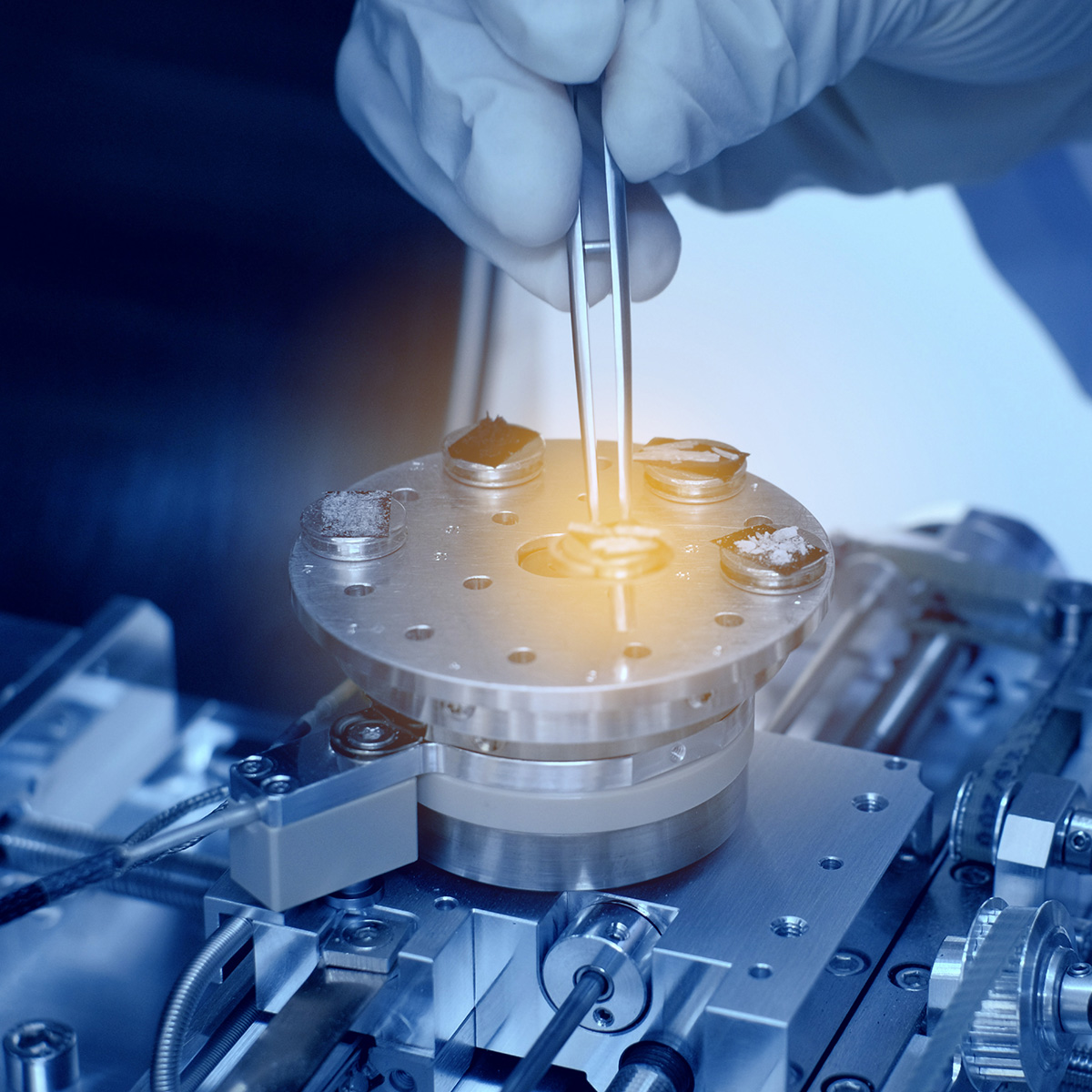
Common applications include:
- Microelectronics
- Defense and avionics
- Displays
- Industrial automation
- Optical sensors and imaging
- Photonics
- Medical and dental devices
- Life science instrumentation
List lead-in:
- Item
Glass Cutting
From Cut-to-Size Glass to Precision Optical Components
HEF Photonics offers multiple glass cutting processes to support requirements ranging from cut-to-size glass and large-format substrates to small, precision optical components.
Cutting processes are selected based on the material, thickness, part geometry, dimensional tolerance, edge requirements, and production volume. Fabricated parts can be supplied as cut components or move directly into additional machining, strengthening, screen printing, coating, or other value-added operations.
For small components, wafers, and optical filters, precision XY saw cutting provides tight dimensional control and consistent edge-to-face perpendicularity with low cosmetic and chip defects. The process is particularly well suited for high-volume rectangular components and applications requiring precision fit, bonding, or hermetic sealing.
Capabilities include:
- Cut-to-size glass
- Precision XY saw cutting and dicing
- Thin and ultra-thin glass
- Glass wafers and optical filter glass
- Large-format substrates
- Coated and uncoated glass
- Prototype through volume production
Glass Edging
Edge Finishing for Fit, Function & Durability
Edge processing is used to improve dimensional accuracy, handling, cosmetic appearance, and the mechanical reliability of fabricated glass.
HEF Photonics offers a variety of edge treatments based on the glass material, geometry, final application, and assembly requirements. Edge finishing can also prepare glass for strengthening, bonding, mounting, screen printing, or additional fabrication.
Available edge treatments include:
- Cut and seamed edges
- Fine-ground edges
- Pencil-ground and polished edges
- Beveled edges
- Dubbed corners
- Custom edge profiles
- Edge treatment and blackening
Glass Machining
Custom Shapes, Holes & Features
Precision CNC machining is used to produce custom glass shapes and features for optical, electronic, display, sensing, and other technical applications.
HEF Photonics can machine holes, slots, notches, steps, grooves, cutouts, bevels, and other application-specific features into a variety of glass and specialty substrates. Machining can be combined with cutting, edging, strengthening, screen printing, coatings, and other processes to produce a more complete finished component.
Capabilities include:
- Custom shapes and profiles
- Holes and cutouts
- Slots, notches, steps, and grooves
- Bevels and mounting features
- Tight dimensional tolerances
- Complex application-specific geometries
- Prototype through production quantities
Grinding, Lapping & Polishing
Precision Surface & Thickness Finishing
Grinding, lapping, polishing, and buffing are used when glass components require additional control of thickness, flatness, surface condition, or cosmetic appearance.
The appropriate finishing process is selected based on the substrate, starting condition, final dimensional requirements, and application. These processes can be performed as part of a larger fabrication sequence or used to prepare components for subsequent strengthening, coating, bonding, or assembly.
Capabilities include:
- Controlled material removal
- Thickness control
- Flatness improvement
- Surface and cosmetic finishing
- Polished surfaces and edges
- Preparation for subsequent fabrication or coating
Glass Screen Printing
Graphics, Functional Inks & Conductive Bus Bars
Screen printing adds decorative and functional features directly to fabricated glass. HEF Photonics offers semi-automatic and automated printing capabilities, with the printing platform and ink system selected based on the substrate, design, environmental requirements, and production needs.
Available inks range from low-temperature epoxy and polyester inks to high-temperature ceramic frits, with standard and custom colors, metallics, and application-specific inks available.
Screen printing capabilities include:
- Borders, frames, logos, text, and icons
- Custom color matching
- Multi-color graphics
- High-temperature ceramic frit
- Epoxy and polyester inks
- Metallic and conductive inks
- Dead-front and application-specific inks
- Edge printing
- Conductive bus bars for ITO and IMITO coatings
Silver epoxy and conductive inks can be printed directly onto ITO and IMITO coatings to provide electrical contact, including L- and U-shaped bus bar configurations through edge printing where applicable.
For applications exposed to demanding environmental conditions, ceramic frit provides a permanent, abrasion-resistant print that is fused to the glass during thermal processing.
Chemical Strengthening
Increased Strength with Minimal Optical Distortion
Chemical strengthening uses an ion-exchange process to increase the mechanical strength of glass while minimizing optical distortion, making it particularly well suited for thin glass and demanding display, sensing, imaging, and protective window applications.
For standard soda lime glass, sodium and potassium ion exchange in a salt bath creates surface compression and improves mechanical performance. Chemical strengthening is particularly well suited for thin soda lime sheets under 3 mm where optical distortion needs to be minimized.
HEF Photonics also offers High Ion Exchange (HIE™) chemically strengthened glass. The HIE™ process creates a deep compression layer at the glass surface and can typically increase strength by 6 to 8 times that of standard float glass, while improving resistance to impact, scratching, and temperature changes.
Benefits include:
- Improved impact resistance
- Improved flexural strength
- Improved scratch resistance
- Improved resistance to temperature changes
- Strengthening of thin, lightweight glass
- Minimal optical distortion compared with thermal tempering
Chemical strengthening can be combined with custom cutting, drilling, edge treatments, screen printing, bus bars, and thin-film coatings to provide a value-added finished component.
Chemical Milling / Surface Healing
Controlled Material Removal to Improve Glass Strength
Chemical milling, also called chemical etching or surface healing, removes a controlled amount of glass following CNC machining, grinding, or other fabrication processes.
The process removes subsurface microfractures and surface defects introduced during fabrication, reducing stress concentration and crack-initiation sites and helping restore the mechanical strength of the glass.
Benefits include:
- Removes subsurface flaws introduced during CNC machining or grinding
- Reduces crack-initiation sites
- Restores mechanical strength
- Improves surface quality
- Preserves optical transmission without adding coatings or absorptive layers
Chemical milling is available for materials including borosilicate, aluminosilicate, fused silica, quartz, and soda lime glass.
Heat Strengthening & Tempering
Strengthening for Mechanical & Thermal Durability
Chemical Strengthening: Increased Strength with Minimal Optical Distortion
Chemical strengthening uses an ion-exchange process to increase the mechanical strength of glass while minimizing optical distortion, making it particularly well suited for thin glass and demanding display, sensing, imaging, and protective window applications.
HEF Photonics offers chemical strengthening of soda lime and select aluminosilicate glass, including our High Ion Exchange (HIE™) process. Depending on the glass type and process, chemical strengthening can improve resistance to impact, scratching, bending, and temperature changes while maintaining the optical qualities of the glass.
Heat Strengthening: Improved Mechanical & Thermal Durability
Heat strengthening uses controlled heating and cooling to create compressive stress in the glass surface, increasing its mechanical and thermal durability compared with standard annealed glass.
The process is well suited for applications requiring increased resistance to impact, bending, and thermal stress, including protective windows, displays, sensors, and other demanding glass applications.
Laser Marking
Permanent Identification & On-Demand Graphics
Laser marking provides permanent identification, graphics, and traceability features directly on select coated and uncoated glass.
CO₂ laser marking can create human-readable identification and lot-tracking information on the face or edge of compatible glass without adding inks, labels, or additional materials. Laser processing can also selectively remove screen-printed ink to create unique graphics and machine-readable identifiers.
Capabilities include:
- Serial and part numbers
- Lot and traceability information
- QR codes and barcodes
- Logos and branding
- Icons and display graphics
- On-demand variable identification
- Marking on select coated and uncoated glass
This capability also allows common glass blanks to be used for multiple part configurations, with unique graphics or identifiers added as needed.
Tapes, Films & Laser-Cut Gaskets
Integrated Sealing, Bonding & Protection
HEF Photonics provides in-house, on-demand laser cutting of tapes, foams, elastomers, gaskets, masks, and other high-performance materials used with fabricated glass.
Laser cutting eliminates dedicated tooling and supports both rapid design changes during prototyping and repeatable production. Complex geometries and small features can be produced from customer-supplied drawing or CAD files.
Typical applications include:
- Environmental and moisture seals
- Bonding glass to mounts, housings, and bezels
- Acoustic insulation and vibration isolation
- Heat shielding and thermal insulation
- Electrically conductive gaskets
- Anti-shatter protection
- Optical surface protection
- Masks for patterning
Gaskets, tapes, and films can also be installed onto fabricated, coated, and screen-printed glass to provide integrated, ready-to-install components and sub-assemblies.
Glass Cleaning
Clean Glass Ready for the Next Process
Proper cleaning is critical to the performance of fabricated glass, particularly when components will undergo coating, printing, bonding, or assembly.
HEF Photonics provides cleaning processes appropriate to the glass type and application requirements. Cleaning can be integrated throughout the fabrication process and prior to final inspection and packaging to help ensure components are ready for the next manufacturing step or customer assembly.
Controlled-environment processing is available for applications with more demanding cleanliness requirements.
Glass Metrology & Inspection
Verification to Drawing Requirements
Dimensional and cosmetic inspection is performed throughout the fabrication process to verify that glass components meet applicable drawing and quality requirements.
Inspection requirements are selected based on the part geometry, tolerance, cosmetic specification, and end-use application.
Inspection and metrology can include:
- Length, width, and thickness
- Hole, slot, and feature dimensions
- Feature location and registration
- Edge condition
- Flatness and other specified dimensional requirements
- Cosmetic quality
- Screen-printed features and registration
- Final inspection to customer drawing requirements
Glass Packaging
Protection Through Handling & Shipment
Proper packaging protects finished glass surfaces, edges, coatings, printed features, and precision geometries during handling and transportation.
HEF Photonics provides packaging appropriate to the size, quantity, surface condition, and fragility of the finished component. Cleaning, inspection, and packaging can be incorporated as the final steps in the manufacturing process for fabricated, strengthened, printed, polished, and optically coated glass.
Process Overview
Glass processing begins with selecting the appropriate substrate based on the optical, mechanical, environmental, dimensional, and cost requirements of the application.
Glass is cut to size and then edged or machined as required to produce the final geometry and features. Depending on the application, additional processes may include grinding and polishing, chemical milling, chemical or thermal strengthening, screen printing, laser marking, tapes and gaskets, or thin-film coating.
Components are cleaned and inspected at appropriate stages of production, with final dimensional and cosmetic inspection performed to the applicable drawing and quality requirements.
By combining these processes within HEF Photonics, customers can source anything from cut-to-order glass to complex, fabricated, strengthened, coated, printed, and ready-to-install components.
- GLASS SELECTION
- CUTTING
- FABRICATION
- FINISHING
- STRENGTHENING
- PRINTING / COATING
- INSPECTION
- FINISHED COMPONENT
Advantages of Glass Processing
Custom Fabrication for Application-Specific Requirements
Glass type, thickness, dimensions, edge condition, surface finish, strengthening, printing, coatings, and other processes can be selected and combined based on the requirements of the finished component.
Prototype Through Volume Production
Manufacturing capabilities support development and prototype requirements as well as repeatable volume production, reducing the need to transition a program between multiple suppliers as production requirements grow.
Broad Range of Materials, Sizes & Thicknesses
HEF Photonics processes a broad range of glass and specialty substrates, from thin and ultra-thin materials and wafers to heavy-gauge and large-format glass. Available sizes and thicknesses vary by material and manufacturing process.
Integrated Glass & Optical Solutions
Glass fabrication can be combined with strengthening, screen printing, conductive bus bars, thin-film optical and conductive coatings, laser marking, tapes and gaskets, cleaning, inspection, and packaging.
This integrated approach provides customers with single-point accountability from glass selection and fabrication through the finished component.
